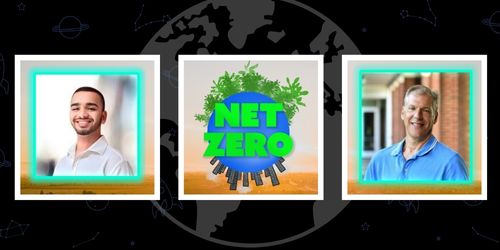
This month, audiences can screen Net Zero Speaks with Daniel Kammen on the Planet Classroom Network. Curated by the Protect Our Planet (POP) Movement and Planet Classroom, this youth-led episode features Dr. Daniel M. Kammen—Johns Hopkins University professor, IPCC Coordinating Lead Author, and member of the U.S. National Academy of Sciences—whose work has shaped energy policy from California to Kenya.
In a focused, solutions-driven conversation, Kammen outlines a clear playbook for the clean-energy transition: fixing outdated grids, powering clinics sustainably, expanding electric mobility without blackouts, and ensuring communities—not just corporations—benefit from new technologies. He breaks down the political and economic forces that slow progress and explains how batteries, transparency, and climate justice can accelerate it.
The Global Search for Education is pleased to welcome this month’s Net Zero Speaks Host, Ricardo Delgado Lander.
Ricardo, welcome—and congratulations on your Net Zero show! Why did you decide to interview Daniel Kammen?
Thank you so much! I wanted to speak with Dr. Kammen because he’s one of those rare scientists who makes the energy transition feel personal and possible. He has advised the UN and national governments, but what truly drew me to him is how he connects big global shifts with the lived realities of communities—especially in places like Latin America where I’m from.
For Net Zero Speaks, I wanted to explore that human side of clean energy: What does a just transition look like in real life? How do we make it fair, accessible, and grounded in the needs of families, workers, and local neighborhoods? Dr. Kammen has a way of breaking down the science while never losing sight of equity, and I knew young people would really benefit from hearing that.
What surprised you most about your interview with Kammen?
What surprised me most was how honest and direct he was about the core problem. He said the issue isn’t that people resist clean energy—most communities want cleaner air, stable bills, and reliable power. The real obstacle is that our systems still heavily favor fossil fuels. Hearing Dr. Kammen say that fossil-fuel subsidies are four to six times higher than all clean-energy investments combined hit me hard.
Coming from someone who has worked inside policy spaces at the highest levels, that realization made me see how much of the transition depends on courage and political will—not just technology. It reminded me that energy justice is not a future concept; it’s a choice we make right now.
Finally, Ricardo, what are your three main takeaways for the Net Zero audience?
First, polluters must pay their real costs.
Dr. Kammen emphasized that a fair carbon price isn’t radical—it simply levels the playing field. Once fossil fuels reflect their true impacts, clean projects can scale quickly.
Second, communities understand the transition better than the systems designed to serve them.
People want clean jobs, healthier air, and energy they can trust. What’s missing is transparency. Public dashboards, local data, and community-driven tools can show the tangible benefits of clean energy and build public momentum.
And third, start where you are.
Switch to electric transport if you can, support local solar, talk with friends about clean options, and remind policymakers that youth are watching. Every choice—big or small—builds pressure for systemic change. Dr. Kammen helped me see that personal action and political action aren’t separate; they reinforce each other.
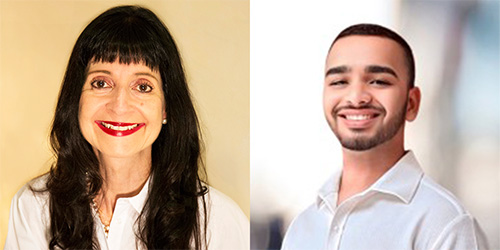
C. M. (Cathy) Rubin and Ricardo Delgado Lander
Don’t miss Net Zero Speaks with Daniel Kammen, now streaming on the Planet Classroom Network.
This episode is curated by the Protect Our Planet Movement and Planet Classroom.
Related posts:
 The Global Search for Education: Student Tools and AI – Sergio Castaneda on Editing Study Fetch
 The Global Search for Education: SIMA Sets New Standards for Creativity and Integrity in Storytelling
 The Global Search for Education: A Conversation with the Director of The Happiness Diaries
 The Global Search for Education: 5000 Miles Apart but Belonging to a Global Community
