
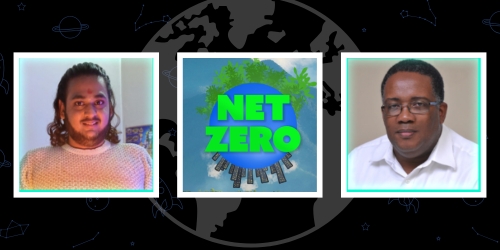
This month, global audiences can watch Net Zero Speaks with Professor Michael A. Taylor on the Planet Classroom Network. The episode is curated by the Protect Our Planet (POP) Movement in association with Planet Classroom, and features an in-depth conversation between Caribbean climate scientist Professor Michael A. Taylor and host Pranav Kumar Gahadwal.
In this powerful episode of Net Zero Speaks, Professor Taylor—Coordinating Lead Author of the IPCC’s landmark 1.5°C Report—explains how climate change is no longer a distant threat but a lived reality across the Caribbean. From hotter nights and flash-flood rainfall to accelerating coastal erosion, Taylor outlines the first impacts communities are already experiencing—and, crucially, what they can do right now to stay safe.
Rather than focusing on abstract global targets, Taylor introduces a practical, solutions-oriented resilience toolkit. He discusses the “Triple C” water security strategy, low-cost heat protections for schools and homes, storm-ready shelter standards, and a clear roadmap for turning climate plans into real, measurable projects within just 12 months. The episode is produced and edited by Gabriela Zavala for the Planet Classroom Network.
The Global Search for Education is pleased to welcome Pranav Kumar Gahadwal
Why did you decide to interview Professor Michael A. Taylor?
I decided to interview Professor Michael A. Taylor because he represents a rare and powerful bridge between global climate science and lived regional reality. As a Coordinating Lead Author of the IPCC’s 1.5°C Report and a leading Caribbean climate scientist, he doesn’t just speak in abstract global targets—he explains what those numbers mean for real communities, right now.
For Net Zero Speaks, my goal was to move the conversation beyond headlines and bring climate science closer to people’s daily lives: water security, heat in schools, storms, and local decision-making. Professor Taylor has spent decades translating climate data into practical, policy-relevant guidance for Small Island Developing States, especially in the Caribbean. That combination of scientific authority, regional insight, and clarity made him the ideal guest for this episode.
What surprised you most about the conversation?
What surprised me most was how immediately actionable Professor Taylor’s insights were.
Despite his global stature and involvement in the IPCC, he didn’t focus on distant timelines or complex jargon. Instead, he consistently emphasized low-cost, near-term actions—things that homes, schools, towns, and governments can realistically implement within months, not decades.
Another striking aspect was his framing of climate change not just as an environmental issue, but as a public health, education, and development challenge. Hearing heat discussed as a classroom issue, or water loss framed as a governance failure rather than scarcity alone, reframed the problem in a very grounded and human way.
What are your three key takeaways for the Net Zero audience?
1. 1.5°C is not abstract—it is already shaping daily life
Professor Taylor made it clear that the impacts of 1.5°C warming are already visible, especially through hotter nights, intense rainfall, flooding, and coastal stress. These are not future risks; they are present-day realities affecting health, productivity, and safety. The key message was urgency—not panic, but immediate preparedness and adaptation.
2. Climate resilience starts with simple, smart choices
From fixing leaking water pipes and harvesting rainwater to improving ventilation and shade in schools, the interview highlighted that many effective climate solutions are low-tech, affordable, and scalable. Resilience does not always require massive infrastructure—it requires good planning, maintenance, and community involvement.
3. Move from plans to projects—and measure what matters
One of the strongest lessons was the importance of execution. Professor Taylor emphasized that success should not be measured only in policies or reports, but in jobs created, outages avoided, water saved, and lives protected. Climate action must move quickly from ideas to implementation, with clear timelines and accountability—especially in climate-vulnerable regions.
Throughout the episode, Professor Taylor returns to a core message that resonates strongly with youth audiences navigating climate headlines every day: climate resilience is possible when science meets action at the community level. The question is no longer whether change is coming, but whether societies will act quickly enough—and wisely enough—to protect people where they live, learn, and work.
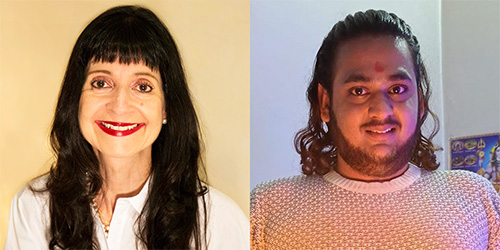
C. M. (Cathy) Rubin and Pranav Kumar Gahadwal
Net Zero Speaks with Professor Michael A. Taylor is now streaming on Planet Classroom Network’s YouTube Channel
The Net Zero Speaks series is curated by Planet Classroom in association with the Protect Our Planet (POP) Movement.
Related posts:
 The Global Search for Education: Climate Activist Drishya Pathak interviews Florian Graichen
 The Global Search for Education: Nathan Ward on Filming the Circus of Empowerment
 The Global Search for Education: Director Eshaan Mani Discusses Threads of Tradition
 The Global Search for Education: Crafting Connections at 30,000 Feet: Director Mark Kiefer Discusses By The Book
