
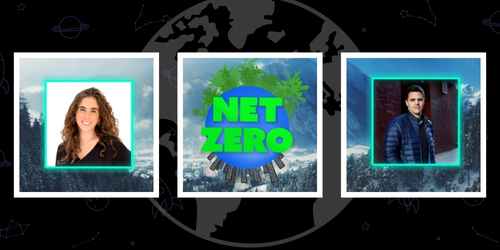
This February, audiences can watch Net Zero Speaks with Gernot Wagner on the Planet Classroom Network. Curated by Planet Classroom and the Protect Our Planet (POP) Movement, the episode features Wagner—climate economist at Columbia Business School, Faculty Director of the Climate Knowledge Initiative, and author of Climate Shockand Geoengineering: The Gamble—in conversation with host Ana Hanhausen.
In a clear-eyed, solutions-focused discussion, Wagner unpacks a central truth shaping the climate transition today: while climate risks are accelerating faster than predicted, the clean energy transition—especially electrification—is advancing even faster in key sectors. From Texas surpassing California in solar deployment to India’s coal tax and Denmark’s Ørsted transformation, Wagner explains why policy sequencing, capital flows, and infrastructure—not rhetoric—determine climate outcomes.
The Global Search for Education is pleased to welcome this month’s Net Zero Speaks host, Ana Hanhausen, whose background in climate advocacy and systems thinking guides the conversation toward practical insight.
Ana, congratulations on your Net Zero Speaks episode. Why did you decide to interview Gernot Wagner?
I decided to interview Gernot because it was an incredible opportunity to learn about climate science and policy from a true expert who brings a positive—but realistic—perspective on where solutions should focus. He doesn’t minimize how serious the crisis is, but he also clearly shows where progress is already happening and how to accelerate it responsibly.
What surprised you most about your interview?
What surprised me most was that even though there’s still a long way to go, some green transitions are advancing at an ever higher rate than expected. The pace of electrification—especially in the power sector—was striking. Gernot makes it clear that technology is no longer the primary bottleneck; politics, permitting, and investment structures are.
What are your three main takeaways for the Net Zero audience?
First, the climate situation is worse than most people realize—but some solutions are moving much faster than expected. That contrast is important. It keeps urgency high without falling into despair.
Second, technologically, the power sector transition is largely “solved.” Solar, batteries, and electrification are already cheaper and scalable. The challenge now is structural: grid access, permitting reform, and policies that allow deployment to happen at speed.
And third, credible climate action requires real transformation—not symbolic gestures. Gernot was very clear that net zero claims must be backed by capital expenditure and long-term investment strategies, not offsets alone. Even if emissions rise temporarily during the build-out, what matters is whether companies and governments are truly shifting where the money flows.
Throughout the episode, Wagner returns to one core message—one that resonates strongly with youth audiences navigating climate headlines daily: “Follow the money.” Investment trends already show more capital flowing into low-carbon technologies than fossil fuels. The question, as Wagner frames it, is whether societies will accelerate that shift fast enough—and govern emerging tools, including solar geoengineering research, with care and restraint.
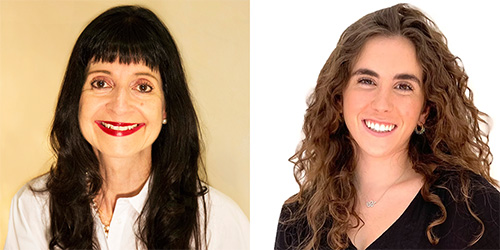
C. M. (Cathy) Rubin and Ana Hanhausen
Net Zero Speaks with Gernot Wagner is now streaming on the Planet Classroom Network.
This episode is curated by Planet Classroom and the Protect Our Planet (POP) Movement.
Related posts:
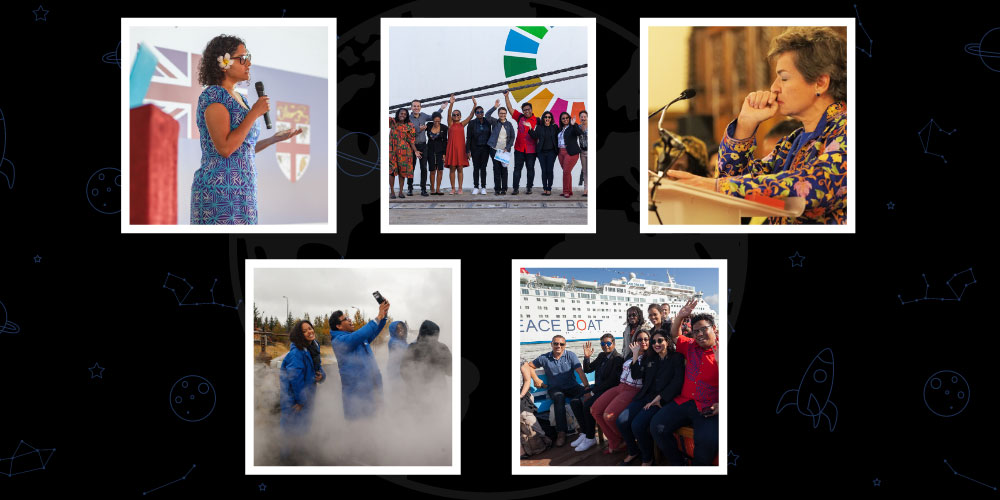 The Global Search for Education: In Peace Boat, Young Activists Fight for Their Planet
 The Global Search for Education: Climate Activist Wen Tian Interviews Hu Jiaojiao
 The Global Search for Education: Malibu Taetz on Animation and Anything Goes
 The Global Search for Education: Climate Activist Drishya Pathak interviews Florian Graichen
