
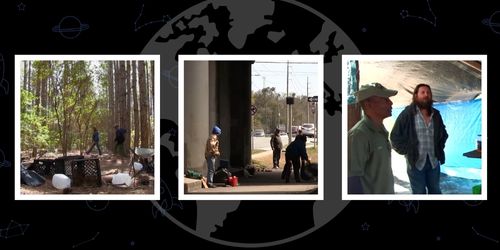
This month, audiences can stream Refuge on Planet Classroom’s YouTube Channel. This title is curated for Planet Classroom by Actuality Abroad.
Refuge follows Lloyd Thorne, a Vietnam-era U.S. Army veteran who now shelters and supports those who served. Directed by Aubrie Campbell Canfield and produced by Robin Canfield, the short spotlights The Veterans Organization of Resource and Recovery for the Homeless (VORRH), co-led with Helen Shaut, where peer mentorship meets housing and wraparound care for homeless veterans. Cinematographer Ian Campbell observes quietly as trust is rebuilt one conversation at a time. Having struggled after returning home himself, Lloyd channels pain into purpose—guiding veterans through bureaucracy, trauma, and transition. A grounded portrait of service after service, and how community-led support restores stability, dignity, and hope.
The Global Search for Education is pleased to welcome Aubrie Campbell Canfield.
Aubrie, when you first began work on Refuge, what inspired you to tell Lloyd Thorne’s story, and how did you build the trust needed to follow his work with unhoused veterans?
This film was made as part of a 48 hour film competition. We didn’t know what the theme would be, but we knew that we would make a documentary. And we had high hopes that we could tell a changemaker’s story in that documentary. So Aubrie asked around to some local reporters for advice on worthy good work being done locally that we could give voice to in a film, and we were introduced to Lloyd Thorne. We made a trip up to Ocala to meet in person before the filmmaking competition began to get to know each other, to better know his work, and to build trust. Lloyd was doing powerful work with veterans, and the stories from the veterans themselves who chose to live in the national forest convinced us that this was a story that needed to be told.
During production, how did you and your team approach filming sensitive moments with veterans while protecting their dignity and privacy?
Our policy was to never push hard on sensitive topics, things that might trigger people we were speaking to. But we didn’t actually have to worry about that. Nearly every person we spoke to wanted to tell us their story, speaking on every detail we could think to ask about and more. There were some people we spoke to who were, unfortunately, no longer able to tell the difference between fiction and reality and we were very careful with their stories. Beyond that, everyone was an eager participant in the film and wanted to the world to know the obstacles they face.
Looking back now, which parts of Refuge feel even more relevant in today’s conversations about veteran homelessness, and is there anything you wish you could revisit, expand, or update?
I am still haunted by the memory of one veteran in the forest describing for us the ways in which people form into groups in the forest. They pool their resources. They pool their efforts. And they raid each others’ camps for resources at night.
I have very little hope that this situation has improved given the state of politics and government in the United States.
Nearly everything in the conversation about veteran homelessness feels relevant today, though, as little has been done by the United States government to rectify the situation.
What do you hope young viewers, educators, and community leaders will think about or act on after watching Refuge today, especially when it comes to supporting veterans in their own communities?
I hope that for young viewers, educators, and community leaders, Refuge stands as proof that one person on a mission can indeed have a great impact on people in the world. They can make a difference. It may start with one person, but there is a ripple effect, and the positive change will spread and grow.
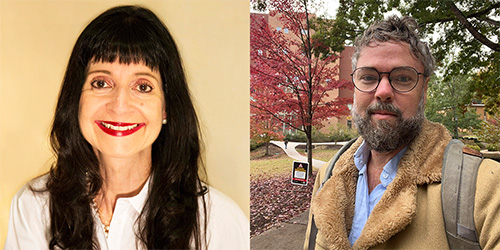
C.M. (Cathy) Rubin with Aubrie Campbell Canfield.
📺 Refuge is now streaming on Planet Classroom’s YouTube Channel. This film is curated by Actuality Abroad.
Related posts:
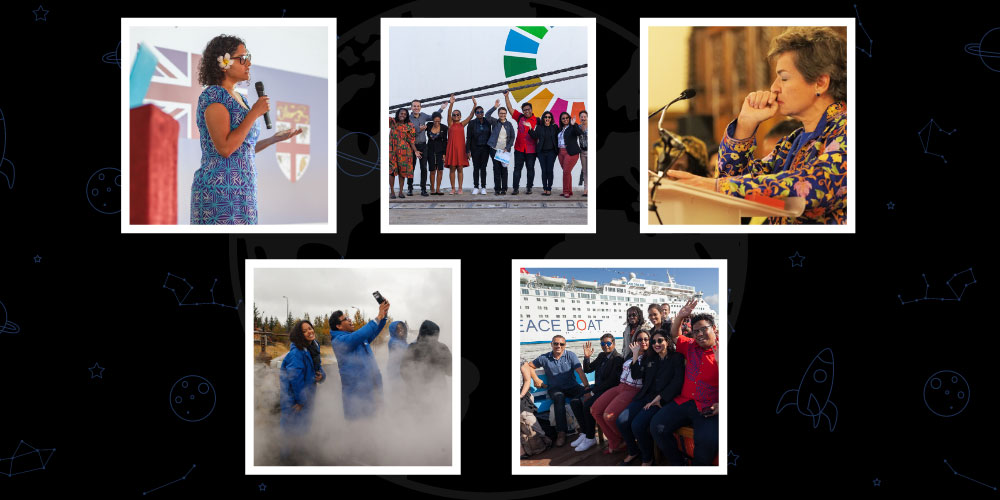 The Global Search for Education: In Peace Boat, Young Activists Fight for Their Planet
 The Global Search for Education: Climate Activist Wen Tian Interviews Hu Jiaojiao
 The Global Search for Education: Malibu Taetz on Animation and Anything Goes
 The Global Search for Education: Climate Activist Drishya Pathak interviews Florian Graichen
