
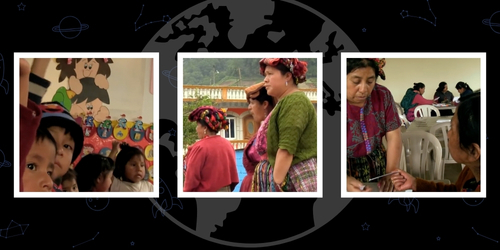
This month on Planet Classroom’s YouTube channel, audiences can watch Rompiendo El Ciclo, a documentary film curated for the Planet Classroom Network by Actuality Abroad.
Rompiendo El Ciclo (“Breaking the Cycle”), directed by Aria Zapata, follows Luciana Pérez López, a resilient single mother of seven in rural Guatemala who defies entrenched gender norms to champion girls’ education. In a community where opportunities for girls are scarce, Luciana emerges as a quiet but powerful leader—building pathways for learning, dignity, and long-term change.
Through intimate documentary storytelling and vivid scenes of daily life, the film illuminates how education can break cycles of poverty, violence, and silence, and how one woman’s courage can strengthen an entire community. Rompiendo El Ciclo is a celebration of empowerment, equality, and determination, reminding viewers that meaningful change often begins at the local level.
The Global Search for Education is pleased to welcome director Aria Zapata.
C. M. Rubin: What first drew you to Luciana Pérez López’s story, and when did you realize it needed to become a film?
Aria Zapata: I was drawn to Luciana for her leadership and the compassion she shows toward others who have survived abuse and trauma, as well as her unwavering commitment to her community. Seeing her resilience as a woman in a machismo-driven environment made me realize that her story deserved to be told through film.
C. M. Rubin: Rompiendo El Ciclo shows education as a form of resistance. How did you see learning transform power dynamics in Luciana’s community?
Aria Zapata: As Luciana learned about her rights, trauma, and collective organizing, the balance of power in her community began to shift. Education allowed her and others to name experiences that had long been normalized or silenced, which reduced fear and isolation. It transformed private suffering into shared understanding, and shared understanding into action. Through learning, Luciana was no longer positioned as someone to be controlled, but as someone capable of leading, advocating, and reshaping norms within a traditionally machismo-driven environment.
C. M. Rubin: What moments during filming most challenged your own assumptions about gender, leadership, or resilience?
Aria Zapata: One of the most challenging moments was witnessing how quietly Luciana led, particularly through her commitment to caring for others. I initially associated leadership with visibility and authority, but watching her support community members—and take in adopted children so they would not endure the abuse and instability she once experienced—forced me to rethink that assumption.
I was also challenged by how resilience appeared not as constant strength or certainty, but in her willingness to continue showing up for others despite doubt, fatigue, and risk. Seeing her lead within a machismo context without rejecting her cultural identity, while actively breaking cycles of harm through caregiving and advocacy, reshaped my understanding of leadership as something lived and relational, not performative.
C. M. Rubin: What do you hope girls, families, and educators—especially in Latin America—take away after watching this film?
Aria Zapata: I hope girls see that their voices matter and that their experiences are not something to endure in silence. I want families to recognize how deeply cycles of violence and inequality affect entire communities, and how love, education, and accountability can interrupt those cycles. For educators, especially in Latin America, I hope the film affirms the power they hold as agents of change—creating spaces for learning, dialogue, and safety that can challenge deeply rooted norms and open paths toward healing and leadership. Ultimately, I hope viewers believe that breaking the cycle is possible, and that change often begins with one person choosing to protect, teach, and lead differently.

C. M. Rubin with Aria Zapata
🎥 Watch Rompiendo El Ciclo on Planet Classroom Network’s YouTube channel.
This film is curated by Actuality Abroad for Planet Classroom.
Related posts:
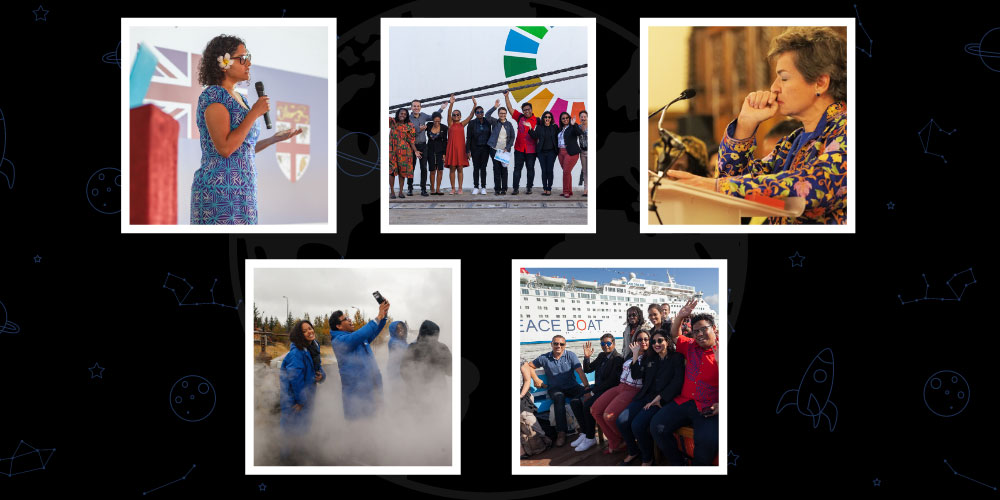 The Global Search for Education: In Peace Boat, Young Activists Fight for Their Planet
 The Global Search for Education: Climate Activist Wen Tian Interviews Hu Jiaojiao
 The Global Search for Education: Malibu Taetz on Animation and Anything Goes
 The Global Search for Education: Climate Activist Drishya Pathak interviews Florian Graichen
