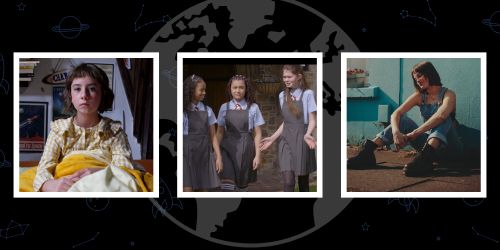
This month on the Planet Classroom Network YouTube channel, audiences can watch The Friend, a short film curated for Planet Classroom by KIDS FIRST! Film Festival.
Directed by Nanni Mann, The Friend approaches the subject of bullying through an unexpected and deeply human lens: imagination. Rather than centering confrontation as conflict, the film follows Charlie, a young girl navigating emotional isolation, as she draws strength from her inner world to rebuild confidence and reclaim her sense of self.
Subtle, hopeful, and emotionally resonant, The Friend reframes bullying not as the defining force in a young person’s life, but as part of a broader journey toward self-love. By emphasizing creativity, resilience, and inner agency, the film invites young viewers — and the adults who care for them — to consider how imagination can become a powerful tool for emotional survival and growth.
With sensitive performances from its young cast and a tone that favors reflection over didacticism, The Friend opens space for conversations about empathy, coping, and the many ways children learn to stand up for themselves.
The Global Search for Education is pleased to welcome director Nanni Mann.
An independent filmmaker, Mann earned early acclaim with her 2023 short Ask. (Best Student Film and Best Actress at B!tchfest L.A.; Best Thriller at Tottenham Film Festival). Her short The Friend continued that momentum, winning Best Editing at the San Diego International Kids Film Festival and screening at Kids First! and Raindance.
C. M. (Cathy) Rubin: What inspired you to explore bullying through the lens of imagination rather than direct confrontation?
Nanni Mann: I actually think the ultimate goal of the film is confrontation. Charlie tries to hide from her bullies and ignore them, but that only escalates the situation. What she really needs is the confidence to stand up for herself — and she derives that confidence from her imagination.
Imagination enables creativity. It allows us to recognize patterns, find meaning, and envision alternatives to the reality in front of us. It’s something we all have innately. Whether we’re being bullied, stressed, underappreciated, or feeling low for any reason, it’s important to remember we all carry this incredibly powerful tool inside us.
Bullies tend to latch onto insecurity. They find the cracks in your foundation and chisel away at them until you break. Rebuilding yourself under that pressure can feel impossible. But imagination has no limits — it can show you something better. Once you know where you’re trying to go, it becomes easier to get there.
When Charlie embraces her imagination, she’s able to picture a better future for herself, and that gives her the strength to confront her bullies calmly and deliberately. She fights for herself, not against them. That kind of confrontation is healthy — and entirely enabled by imagination.
C. M. (Cathy) Rubin: How did you work with young actors to portray emotional isolation so authentically?
Nanni Mann: Children are generally very emotionally intuitive. When they’re also interested in acting and empathy, you don’t have to push very hard to get something authentic.
During auditions, we asked each child why they felt drawn to the story and the characters. It became clear they all had their own understanding of bullying and how it can make someone feel. Dolly Gadsdon, who plays Charlie, is phenomenal — her audition tape made us all cry.
We had a very brief rehearsal with just Dolly, Lola, Angel, Asha, and myself. It was less about performance and more about getting to know one another and sharing stories. We created a safe space, the girls became fast friends, and there was room to play.
These kids understood the subject intimately, but they also wanted to be creative with it — and I think they had a lot of fun doing so.
C. M. (Cathy) Rubin: Why was it important for the film’s message to remain subtle rather than explicit?
Nanni Mann: One of the things that drew me to this story is that bullying isn’t the film’s focus. It’s simply part of Charlie’s world and her journey toward self-love. When we enter the story, the bullying is already established. We’re not witnessing how it begins — we’re observing the start of a solution.
Explicit stories about bullying absolutely have their place, but bullying exists in many forms, and every situation requires a nuanced response. I was drawn to telling a hopeful story — one that shows someone coming out stronger on the other side, as so many do.
The Friend isn’t about offering a definitive solution. It’s about spending time with a character as she finds her own way through a difficult situation, and reflecting on our emotional response. That approach invites more people in and gives the film a sense of universality.
C. M. (Cathy) Rubin: What conversations do you hope The Friend sparks among families and young viewers?
Nanni Mann: I think it’s a really uplifting film. There are many films about bullying that end very darkly and function mainly as cautionary tales. The Friend is an alternative to that.
I hope it leads to positive conversations among families and young friends — conversations about self-love, coping, and resilience. I’d like young viewers to think about which parts of themselves they want to carry into adulthood, and for adults to reflect on where some of their own coping mechanisms came from.
Most of all, I hope people feel encouraged to share their stories with one another. Any conversation is a good conversation.
Thank you, Nanni!
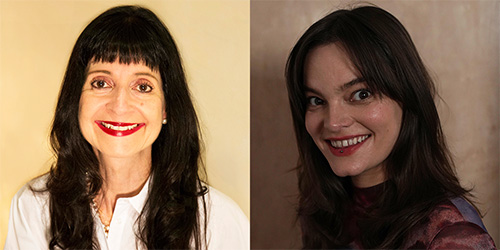
C. M. (Cathy) Rubin with Nanni Mann
🎥 Watch The Friend on Planet Classroom Network.
This film is curated by KIDS FIRST! Film Festival for Planet Classroom.
Related posts:
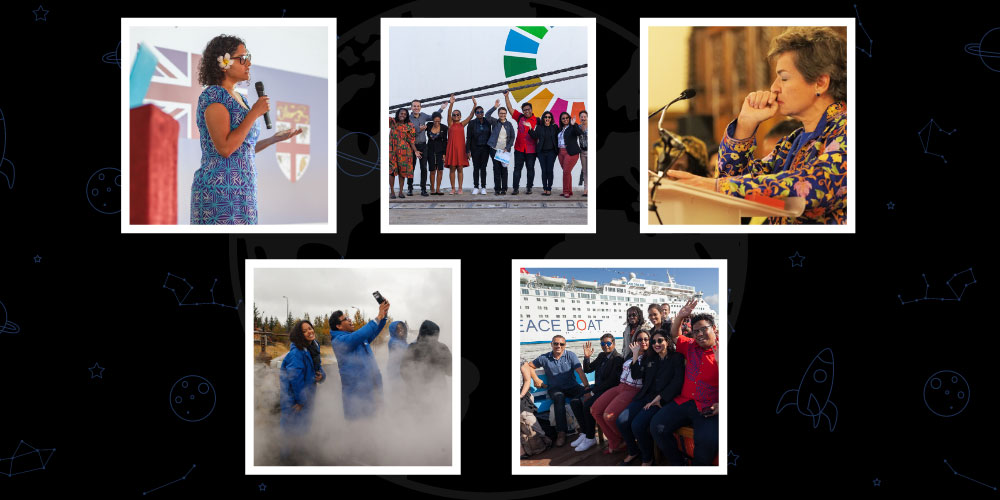 The Global Search for Education: In Peace Boat, Young Activists Fight for Their Planet
 The Global Search for Education: Climate Activist Wen Tian Interviews Hu Jiaojiao
 The Global Search for Education: Malibu Taetz on Animation and Anything Goes
 The Global Search for Education: Climate Activist Drishya Pathak interviews Florian Graichen
