
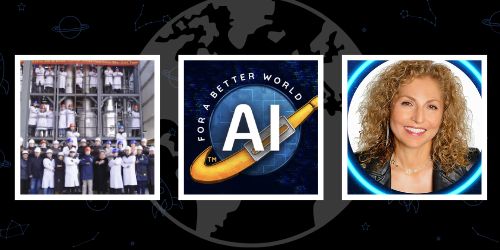
In the latest episode of AI For a Better World – Building What Matters in the Age of AI, host C. M. (Cathy) Rubin sits down with Anousheh Ansari, CEO of the XPRIZE Foundation, to explore what separates entrepreneurs who create lasting global impact from those chasing artificial intelligence hype. Drawing on XPRIZE’s work in wildfire detection and carbon removal, Ansari emphasizes that AI is a tool — not the mission. Leadership, real-world validation, and long-term responsibility ultimately determine whether innovation serves humanity.
The episode is produced and edited by Kaylee Cordray.
The Global Search for Education is pleased to welcome Kaylee Cordray to share insights from producing and editing this conversation.
C. M. Rubin: What were the biggest creative and editorial challenges in shaping this conversation into a clear, compelling story?
Kaylee Cordray:
The most significant challenge was translating the imagery in my mind into something tangible on screen. When you read or hear powerful ideas, you naturally visualize entire worlds in detail. Turning those internal images into a cohesive and compelling video format required balancing creativity with technical execution. It pushed me to think carefully about how visuals, pacing, and structure could bring abstract ideas about AI and leadership to life.
C. M. Rubin: How did you determine which moments or quotes from Anousheh Ansari would resonate most strongly with viewers?
Kaylee Cordray:
I focused on balancing technical and scientific insight with accessibility. Anousheh shared deeply thoughtful ideas about entrepreneurship and ethical AI, but it was important to make sure viewers could follow and connect with them. I selected moments that clearly communicated her core message — that AI is a tool and leadership gives it direction — while maintaining engagement for a general audience.
C. M. Rubin: What did you learn about pacing and structure when editing a thoughtful, ideas-driven interview like this one?
Kaylee Cordray:
My biggest takeaway was learning to slow down intentionally. I naturally gravitate toward fast-paced editing, but this conversation required space. Holding a viewer’s attention without overwhelming them with constant movement or information was an important growth experience. It taught me that clarity and rhythm can be more powerful than speed.
C. M. Rubin: What advice would you give to other student editors working on interview-based films about technology or leadership?
Kaylee Cordray:
Take a human-centered approach. Technology can be complex, but people connect with stories about other people. Emphasize the individuals behind the innovation while still highlighting the key technological advancements. Emotional clarity is what keeps viewers invested.
C.M. Rubin: Congratulations Kaylee you did a terrific job!

C. M. (Cathy) Rubin and Kaylee Cordray
Don’t miss AI For a Better World – Building What Matters in the Age of AI, now streaming on the Planet Classroom Network. This original series is curated by Planet Classroom.
Related posts:
 The Global Search for Education: Nicolas Olavario Reflects on Producing the Inaugural Episode of AI For A Better World with Guest Nick Bostrom
 The Global Search for Education: Sergio Castaneda on Editing AI for Accurate Business Insights
 The Global Search for Education: AI for a Better World: AI & Aging: Dor Skuler on ElliQ’s Impact
 The Global Search for Education: Human Creativity – Our Edge in the AI Era
