
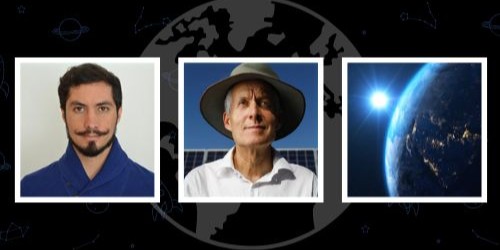
This month, global audiences can watch Net Zero Speaks with Andrew Blakers on the Planet Classroom Network. Curated by the Protect Our Planet (POP) Movement in association with Planet Classroom, the episode features youth climate leader Ivan Ransom in conversation with Professor Andrew Blakers of the Australian National University.
Blakers is one of the world’s leading renewable energy experts and co-inventor of the PERC solar cell technology that powers most solar panels installed globally today. His work has helped make solar energy one of the fastest-growing and most affordable sources of electricity in the world.
In this episode, Blakers explains why a transition to 100 percent renewable energy is not only possible but increasingly affordable. He discusses how ultra-low-cost solar power and pumped hydro “gravity batteries” can provide reliable, round-the-clock electricity while addressing common concerns about energy storage, grid reliability, land use, and raw materials.
Produced and edited by Fabian Sanchez, with art direction by Emily Brooks and production coordination by Samantha Burns, the episode explores one of the defining questions of our time: How do we power the future without fueling climate change?
The Global Search for Education is pleased to welcome Ivan Ransom.
Ivan, why did you decide to interview Andrew Blakers?
As a climate activist focused on sustainability, I believe the transition to clean energy is one of the most important actions we can take to address climate change. Meeting the scientist whose innovations helped make modern solar power possible was an incredible opportunity.
I was eager to learn from someone whose work has transformed both the present and future of renewable energy on a global scale. Professor Blakers combines scientific expertise with practical solutions, and I felt his perspective would help audiences better understand what is possible in the transition to a net-zero future.
What surprised you most about your conversation with Andrew Blakers?
What surprised me most was learning that the transition to renewable energy is possible right now using technologies that already exist.
Before the interview, I assumed renewable energy still produced too little power to meet global demand. I was amazed to learn that this is no longer the case. Professor Blakers explained that solar energy, combined with large-scale energy storage systems, can already provide reliable electricity at a cost that is often lower than fossil fuels.
The conversation made me realize that the biggest barriers are no longer technological. In many cases, they are political, economic, and social.
Finally, Ivan, what are your three key takeaways for the Net Zero audience?
- The renewable energy transition can happen now.
The technologies needed to power a clean-energy future already exist. What is needed most is the commitment and political will to deploy them at scale.
- Solar energy is a long-term solution.
The raw materials required for solar panels are abundant, making solar one of the most sustainable and scalable energy sources available.
- Solar power democratizes energy.
Unlike many traditional energy systems, solar power can be deployed almost anywhere, giving communities and individuals greater control over how they generate electricity.
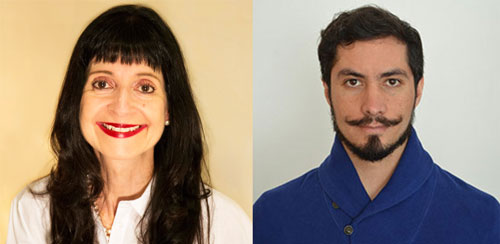
C. M. (Cathy) Rubin and Ivan Ransom
Net Zero Speaks with Andrew Blakers is now streaming on the Planet Classroom Network YouTube Channel.
The Net Zero Speaks series is curated by Planet Classroom in association with the Protect Our Planet (POP) Movement.
Related posts:
 The Global Search for Education: Climate Activist Wen Tian Interviews Hu Jiaojiao
 The Global Search for Education: Malibu Taetz on Animation and Anything Goes
 The Global Search for Education: Climate Activist Drishya Pathak interviews Florian Graichen
 The Global Search for Education: Nathan Ward on Filming the Circus of Empowerment
