
C. M. (Cathy) Rubin in Conversation with Kaylee Cordray
Can artificial intelligence accelerate the fight against climate change—or could the technology itself become part of the problem?
In this compelling episode of AI for a Better World, host C. M. (Cathy) Rubin sits down with Peter Gilmer, CEO of The Nest Campus, to explore how AI is transforming climate innovation and the global race toward net zero. From nuclear fusion and clean energy to smarter electrical grids, emissions tracking, deforestation prevention, climate-risk investing, and extreme-weather forecasting, the conversation examines where artificial intelligence may have the greatest potential to help address one of humanity’s most urgent challenges.
The episode also considers an important tension: while AI can provide powerful tools for climate action, the technology itself requires enormous amounts of energy. For young people experiencing climate anxiety, however, the conversation ultimately offers an empowering message—technology can be a tool for turning concern into meaningful action and creating new opportunities for innovation.
Bringing these ideas to life visually is Producer/Editor Kaylee Cordray, whose work combines storytelling, motion graphics, music, and carefully selected B-roll to make complex global issues accessible to audiences around the world.
To go behind the scenes of this production, Planet Classroom Network filmmaker and editor Kaylee Cordray shared her insights on editing the episode, discovering new possibilities for AI and climate action, and the importance of putting authentic human stories at the center of technological storytelling.
The Global Search for Education is pleased to welcome digital artist and filmmaker Kaylee Cordray.
C. M. Rubin: Kaylee, this episode tackles a complicated question: can AI help fight climate change while also consuming enormous amounts of energy? As an editor, how did you turn such a complex debate into a clear, engaging story—and what choices did you make with B-roll, pacing, and music to keep viewers watching?
Kaylee Cordray: Matching B-roll to the storyline is crucial. Finding the right high-action and human-centered shots that help move the plot forward is an essential part of the editing process. These visuals should complement the narrative and enhance the story being told, making thoughtful B-roll selection a key aspect of producing an effective edit.
C. M. Rubin: You worked with footage covering everything from nuclear fusion and clean energy to wildfires, emissions tracking, deforestation, and climate investing. What surprised you most about the ways AI is already being used to address climate change, and did editing this episode change your own perspective on AI and the environment?
Kaylee Cordray: I think AI is becoming involved in almost everything we do, so learning that it is being used in climate efforts isn’t something that surprises me. Throughout producing the AI for a Better World series, I’ve also started to see AI from a more positive perspective. As an artist, the series has helped me recognize the ways AI can support creativity and bring positive changes to the workspace.
C. M. Rubin: For other young filmmakers trying to tell stories about huge subjects like AI and climate change, what did this production teach you about making a complex global issue feel human, visual, and relevant to an audience—and what would you do differently or build on in your next film?
Kaylee Cordray: Using authentic and relatable human stories is essential to telling stories with genuine heart and emotion. This is especially important when discussing AI, as the term itself—and technology more broadly—can often feel cold, distant, or impersonal. Centering stories around real people helps create an emotional connection and allows audiences to see the human impact behind the technology. For my next production, I think incorporating human-centered stories with heart, depth, and layers will be crucial to creating meaningful and successful storytelling.
C. M. Rubin: Thank you, Kaylee!

C. M. Rubin and Kaylee Cordray
About Kaylee Cordray
Kaylee Cordray is a senior at Missouri State University pursuing a Bachelor of Fine Arts with an emphasis in Graphic Design and a minor in Marketing. She specializes in motion graphic design and is proficient in Adobe After Effects, Adobe Photoshop, Adobe Illustrator, Adobe InDesign, Final Cut Pro, and Figma.
Producer/Editor: Kaylee Cordray
Art Direction: Emily Brooks
Associate Producer: Rashard Grant
WATCH: AI for a Better World: Can AI Save the Planet? The Billions Fighting Climate Change with Peter Gilmer is streaming on the Planet Classroom Network YouTube Channel.
Related posts:
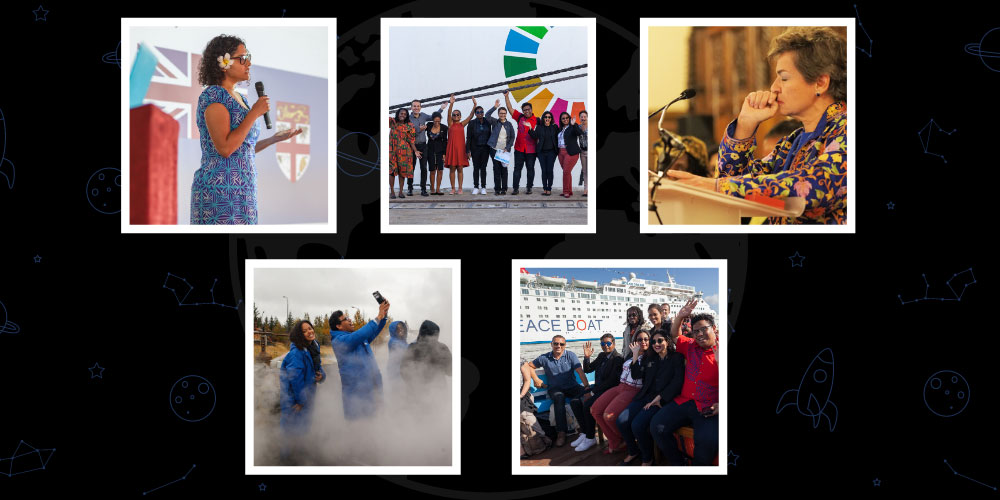 The Global Search for Education: In Peace Boat, Young Activists Fight for Their Planet
 The Global Search for Education: Climate Activist Wen Tian Interviews Hu Jiaojiao
 The Global Search for Education: Malibu Taetz on Animation and Anything Goes
 The Global Search for Education: Climate Activist Drishya Pathak interviews Florian Graichen
