
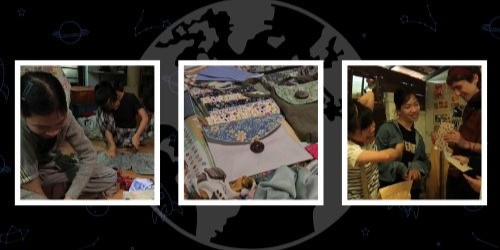
This month on the Planet Classroom Network YouTube channel, audiences can watch The Happiness Shop, a short documentary curated for Planet Classroom by Actuality Abroad.
Directed by Brianna Avnell, The Happiness Shop tells the inspiring true story of women with disabilities in Vietnam who are building financial independence through meaningful work. Working in a social enterprise that transforms recycled materials into handmade products, these women are creating economic opportunity, reducing waste, and challenging perceptions about disability and inclusion.
Through powerful personal stories, the film explores how employment, sustainability, and community empowerment can transform lives. By highlighting entrepreneurship, disability inclusion, and environmental responsibility, The Happiness Shop shows how local solutions can create lasting social change.
Rather than focusing on disability as a limitation, the film centers the talents, creativity, and determination of the women themselves. It reveals how opportunity and inclusion can unlock potential, strengthen communities, and create pathways to dignity and independence.
Warm, hopeful, and deeply human, The Happiness Shop invites audiences to rethink what opportunity, belonging, and meaningful work can look like in today’s world.
The Global Search for Education is pleased to welcome director Brianna Avnell.
C. M. Rubin: What first drew you to the women featured in The Happiness Shop, and why did you feel their story needed to be told now?
Brianna Avnell: What first drew me to the women in The Happiness Shop was their warmth, resilience, and determination to build lives filled with purpose and independence. Despite facing barriers that many people never have to consider, they approached every challenge with creativity, humour, and a strong sense of community.
I felt their story needed to be told now because conversations around inclusion often focus on limitations rather than possibilities. At a time when societies around the world are rethinking what meaningful work, belonging, and sustainability look like, these women offer a powerful example of how inclusive opportunities can transform lives. Their experiences remind us that everyone deserves the chance to contribute, connect, and be valued.
C. M. Rubin: Your film connects sustainability with social inclusion. What did you learn about the relationship between meaningful work, independence, and dignity while making this documentary?
Brianna Avnell: One of the most inspiring aspects of The Happiness Shop is the way it brings together environmental sustainability and social inclusion in a very tangible way. The women are repurposing clothing material offcuts that might otherwise end up as waste and transforming them into practical and beautiful products—from wallets and scrunchies to fans, bags, and unique tourist souvenirs. Through creativity and craftsmanship, they are giving new life to discarded materials while creating something of real value.
Making this documentary reinforced how deeply meaningful work is connected to a person’s sense of independence, confidence, and dignity. The women aren’t simply completing tasks; they are contributing to a sustainable enterprise, developing skills, expressing their creativity, and seeing the direct impact of their work. There is immense pride in knowing that something you have made will be used, appreciated, and purchased by others.
What I learned is that sustainability is not only about protecting the environment—it’s also about creating communities where everyone has the opportunity to participate and thrive. The Happiness Shop demonstrates that when people are given meaningful opportunities to contribute, the benefits extend far beyond the individual. It creates a stronger, more inclusive community while also finding innovative ways to reduce waste and support a more sustainable future.
C. M. Rubin: Many people still underestimate the abilities and contributions of individuals with disabilities. How did making this film challenge your own assumptions, and what do you hope it challenges in audiences?
Brianna Avnell: One of the most valuable lessons for me was recognizing how often society frames disability through a deficit lens. Spending time with the women in The Happiness Shop shifted the focus away from what people assume they cannot do and towards the incredible skills, perspectives, and contributions they bring.
The film challenged me to think more critically about the barriers that exist in our systems and attitudes rather than within individuals themselves. I hope audiences come away questioning their own assumptions and recognizing that inclusion isn’t about lowering expectations—it’s about removing obstacles and creating opportunities. When we do that, people’s strengths and potential become impossible to ignore.
C. M. Rubin: If viewers remember one message after watching The Happiness Shop, what do you hope that message will be—and why is it important for communities around the world?
Brianna Avnell: If viewers remember one message, I hope it’s that everyone deserves the opportunity to belong, contribute, and be seen for their abilities rather than their differences.
This message is important because truly inclusive communities benefit everyone. When we create environments where people of all abilities can participate meaningfully, we foster empathy, innovation, and stronger social connections. The women in The Happiness Shop show us that happiness isn’t found in being the same—it’s found in being valued, supported, and given the chance to reach our potential. That’s a lesson that resonates far beyond one community and speaks to what kind of world we want to build together.
Thank you, Brianna!

C. M. Rubin with Brianna Avnell
🎥 Watch The Happiness Shop on Planet Classroom Network.
This film is curated by Actuality Abroad for Planet Classroom.
Related posts:
 The Global Search for Education: In Peace Boat, Young Activists Fight for Their Planet
 The Global Search for Education: Climate Activist Wen Tian Interviews Hu Jiaojiao
 The Global Search for Education: Malibu Taetz on Animation and Anything Goes
 The Global Search for Education: Climate Activist Drishya Pathak interviews Florian Graichen
