
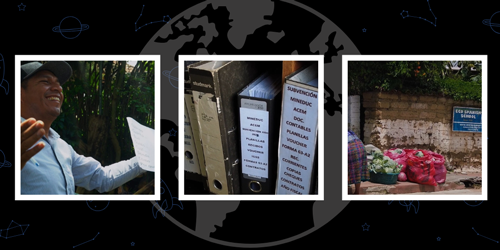
This month, audiences can watch Empowerment In Action: The Eco Spanish School Story on the Planet Classroom YouTube Channel. This film is curated by Actuality Abroad for Planet Classroom.
In Empowerment In Action: The Eco Spanish School Story, director Yuelin Liu takes audiences to San Juan La Laguna, Guatemala, to meet María and Benedicto, two local leaders who turned adversity into opportunity by building the Eco Spanish School.
What began as a small idea has grown into a community-centered enterprise rooted in education, cultural connection, and giving back. As María and Benedicto share the personal struggles behind their journey, the film explores how grassroots entrepreneurship can create opportunities that extend far beyond the success of a single business.
Produced on location in Guatemala by an Actuality Abroad crew, the documentary is ultimately a story about resilience, women’s empowerment, education, and the power of local people to create meaningful change within their own communities.
The Global Search for Education is pleased to welcome Director Yuelin Liu.
C.M. Rubin: Yuelin, María and Benedicto share very personal stories about their lives and the challenges they faced building the Eco Spanish School. How did you build enough trust with them to capture such genuine and unfiltered moments?
Yuelin Liu: I spent an entire week doing almost nothing but listening carefully to their stories, staying at the Eco Spanish School, talking to everyone there, and observing how the school operated every day. We basically lived life with them. By learning about their experiences and seeing how actively they continue to help their community, we became genuinely inspired by them.
Many of our conversations did not feel like interviews. We simply wanted to get to know María and Benedicto personally. Our team never treated them as just the subjects of our film. They were generously allowing us into their lives, and we genuinely liked them as people from the beginning. By the end of the month, I believe we had become friends.
As a documentary filmmaker, I don’t believe genuine moments can be forced. Our approach created a space where María and Benedicto felt comfortable speaking honestly and guiding us toward the experiences that mattered most to them. Once that trust was established, the camera became less of an intrusion and more of a quiet observer.
Ultimately, the vulnerability and honesty in the film came from their willingness to share their lives with us. I am very grateful for the trust they gave us.
C.M. Rubin: The film has been praised for its beautiful images of Guatemala. How did you and cinematographer Mattie Hartman balance the extraordinary landscape with the intimate human story at the center of the film?
Yuelin Liu: The natural scenery was actually not our priority when we first created our shot list. We began by thinking about how to visualize the stories María and Benedicto were telling us. Our approach was to follow them through their daily activities—food distribution, coffee tours, food festivals, and teaching at the Eco Spanish School.
Many of those activities naturally came with beautiful scenery because San Juan La Laguna is visually extraordinary. But we also realized that the landscape could serve a deeper storytelling purpose.
When María and Benedicto spoke about their childhoods and the difficulties they had experienced, we felt that simply using old footage would not be enough. Some of the challenges they experienced growing up are still experienced by people in the town today. So instead, we captured parts of San Juan La Laguna that could help reflect those experiences.
I remember Mattie spending an entire day sitting on different streets, filming both the vibrant, more developed parts of the town and the less-developed areas. That contrast helped bring their story to life.
The landscape becomes especially important at the end of the film when María asks, “¿Qué más podría pedir?” — “What more could I ask for?”
We wanted audiences to feel the magnitude of what María and Benedicto had built. After experiencing so much hardship, they chose to give back to the place where they were born and raised. To me, only a landscape that vast, open, and breathtaking could convey the sense of awe we felt when we understood everything they had accomplished.
C.M. Rubin: María’s story also raises important questions about Indigenous women, opportunity, and empowerment. How did you explore those larger social issues without allowing them to overwhelm her personal story?
Yuelin Liu: We did not begin with the goal of making a film that explained women’s empowerment or the challenges women face in building their careers. Instead, I wanted to listen to María’s personal journey and allow those larger themes to emerge naturally from her story.
I believe audiences connect most strongly with social issues when they first connect with a person. We presented María’s life through detailed observations of what she does every day. In this way, audiences discover the broader issues through her challenges, ambitions, resilience, and determination.
There is a moment when María talks about how Indigenous women can achieve greater things. What made that especially powerful to me was that it came directly from her. She was speaking English, which is not her first language, and that made her words feel even more genuine.
We did not need to tell audiences what they should think about women’s empowerment. By showing María’s life and allowing her to speak for herself, audiences could discover those themes through the experiences of a real person.
C.M. Rubin: María and Benedicto began with a small grassroots idea that ultimately created opportunities beyond the school itself. What is the single most important lesson you hope young people and aspiring social entrepreneurs around the world take from their journey?
Yuelin Liu: The most important lesson I hope audiences take away is that meaningful change can begin with a small idea, a real need, and the willingness to keep moving forward despite uncertainty and challenges.
You have to be the person who believes in what you are doing, and you have to continue doing what you believe in.
What is also inspiring about María and Benedicto is that their vision extends beyond their own success. They look around them and see what their community needs. They built the school with care and with the people around them in mind.
Their journey shows that even a small grassroots idea can create opportunities that reach far beyond simply creating a job or building a successful business. It can become a way of strengthening and giving back to an entire community.
Thank you, Yuelin!
Film Credits
Director: Yuelin Liu
Producer: Izzy Soden
Cinematographer: Mattie Hartman
Editor: Jake Westerman
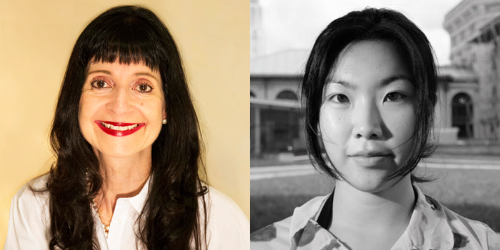
C. M. (Cathy) Rubin with Yuelin Liu
🎥 Watch Empowerment In Action: The Eco Spanish School Story on the Planet Classroom Network YouTube Channel.
This film is curated by Actuality Abroad for Planet Classroom.
Related posts:
 The Global Search for Education: Climate Activist Drishya Pathak interviews Florian Graichen
 The Global Search for Education: Nathan Ward on Filming the Circus of Empowerment
 The Global Search for Education: Director Eshaan Mani Discusses Threads of Tradition
 The Global Search for Education: Crafting Connections at 30,000 Feet: Director Mark Kiefer Discusses By The Book
