
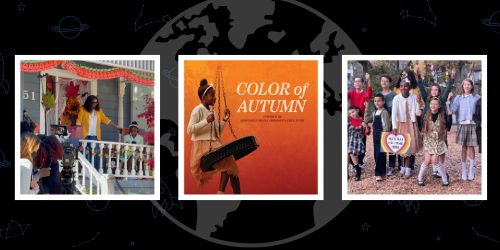
This month on the Planet Classroom Network YouTube channel, audiences can watch Color of Autumn, a powerful short film about racism in 1966 Chicago and the moment a young girl first confronts injustice. Inspired by a true story, the film follows eight-year-old Dottie Grimsby, whose warm childhood on Chicago’s South Side changes after a painful encounter on a playground reveals the reality of racial discrimination. This film is curated for Planet Classroom by Kids FIRST! Film Festival.
Directed by Aimiende Negbenebor Sela, who also serves as a producer, the Color of Autumn film explores how a child’s innocence can be transformed by a single moment of prejudice. Through memory and reflection, audiences witness the experience alongside both young Dottie and her adult self.
Written by Constance Nicole Frierson, Alexandra Engelson, and Rebecca Bloom, who also serve as producers, and produced by Pamela Weiss and Yhá Mourhia Wright, the film brings together a creative team dedicated to telling a deeply personal story rooted in American history. With cinematography by Alexxiss Jackson, the film uses intimate narration and carefully crafted visual storytelling — including subtle color shifts and nostalgic imagery — to mirror Dottie’s loss of innocence.
A powerful classroom discussion film about racism, Color of Autumn invites audiences to reflect on empathy, allyship, and the courage required to stand up against discrimination. Both emotionally resonant and historically grounded, the film encourages families, educators, and students to ask an important question: when injustice appears, who will stand up?
The Global Search for Education is pleased to welcome director Aimiende Negbenebor Sela
C. M. (Cathy) Rubin:
You chose to tell this story largely through Dottie’s childhood lens. Why was it important to explore racism through innocence rather than confrontation — and how does that shift the audience’s emotional response?
Aimiende Negbenebor Sela:
The idea here was that adult Dottie was traveling down memory lane and taking us on the journey with her. I knew I wanted both adult and young Dottie to be present in each scene — one living the experience and the other recalling the lived experience — and that we needed to make sure it was clear that the former was in her present day witnessing what was happening in her past.
C. M. (Cathy) Rubin:
The film’s warm tones gradually transition as Dottie encounters discrimination. How did you use color, cinematography, and visual framing to mirror her loss of innocence?
Aimiende Negbenebor Sela:
I wanted to paint a picture and encourage the audience to sit with it. I created a detailed lookbook and pitch deck that covered every aspect of the production — from the color palette, the wardrobe of the time (the sixties), the music, the production design, the homes and locations, and the visuals, including the types and styles of shots.
We also talked about lenses, with my DP even going as far as sourcing some vintage lenses that we used for the 1960s scenes. I knew I wanted certain moments to feel nostalgic and flowy, so we employed the use of a Steadicam; for instance, during the daddy-daughter dance scene. I wanted the feel of looking through Polaroid photos or an old album of photographs, so I knew we would need to frame for that, and I had that in mind while designing my shots.
With the film’s pacing and flow, we worked with our editor to get that just right, and she nailed it. I wanted the images to look like old photographs with all the changes these photos experience over time. Lastly, the music and sound design: we were lucky to have Charlie Peacock’s music available to us, and our sound designer, as they say, understood the assignment. In short, our initial discussions culminated in a fabulous team effort that I believe did this film — Constance’s story — justice.
C. M. (Cathy) Rubin:
Although set in 1966 Chicago, the film feels painfully current. What parallels do you see between Dottie’s experience and what children face today?
Aimiende Negbenebor Sela:
In this piece, we are showing an ugly side of society — of humanity — and essentially saying, “This isn’t the way to be,” “This is hurtful,” and “Bullying is ugly.” In an ideal world, we would respect each other’s differences and understand that there is enough room for all of us to exist and to do so harmoniously. But sadly, we are currently not living in an ideal world, just as we were not in 1966. That doesn’t mean we shouldn’t strive for it, though. I believe we should.
C. M. (Cathy) Rubin:
One of the most powerful moments is when a friend stands up against racism. What message do you hope young viewers take away about courage and allyship?
Aimiende Negbenebor Sela:
I want the audience to leave this film with a sense of purpose. I want each person to feel inspired to be a little more conscientious, a little kinder, to feel themselves cringe a bit in the presence of bullying or discrimination, and to feel empowered to safely do and/or say something when they encounter an injustice or a form of “othering.”
Thank you, Aimiende!
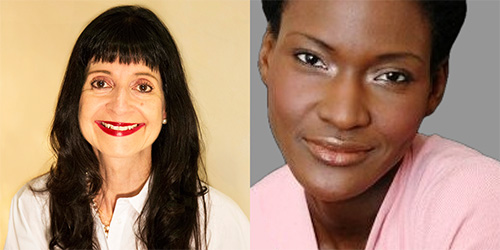
C. M. (Cathy) Rubin with Aimiende Negbenebor Sela
🎥 Watch Color of Autumn on the Planet Classroom Network YouTube Channel
This film is curated by Kids FIRST! Film Festival for Planet Classroom.
Related posts:
 The Global Search for Education: Climate Activist Wen Tian Interviews Hu Jiaojiao
 The Global Search for Education: Malibu Taetz on Animation and Anything Goes
 The Global Search for Education: Climate Activist Drishya Pathak interviews Florian Graichen
 The Global Search for Education: Nathan Ward on Filming the Circus of Empowerment
