
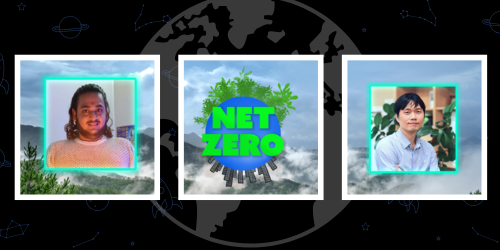
Pranav Kumar Gahadwal in Conversation with Jong-Seong Kug
This month, global audiences can watch Net Zero Speaks on the Planet Classroom Network, featuring a critical conversation between climate host Pranav Kumar Gahadwal and leading climate scientist Professor Jong-Seong Kug. The series is curated by Planet Classroom in association with the Protect Our Planet (POP) Movement.
Jong-Seong Kug, a Professor at Seoul National University and a renowned climate dynamist, specializes in the El Niño–Southern Oscillation (ENSO) and its global teleconnections. His research is vital to understanding how atmospheric interactions drive floods, droughts, and heatwaves across continents.
In this Net Zero Speaks episode, Professor Kug explains how climate change is fundamentally reshaping El Niño’s behavior, making its impacts more extreme and less predictable. He outlines how warming oceans are amplifying risks to global food systems and why historical climate patterns are no longer a reliable map for the future.
Focused and strategic, the conversation explores how governments and disaster planners can use improved seasonal forecasts as early warning tools to strengthen global preparedness and reduce climate shocks before they escalate into humanitarian crises.
The Global Search for Education is pleased to welcome Pranav Kumar Gahadwal.
C. M. Rubin: Pranav, why did you decide to interview Professor Jong-Seong Kug?
Pranav Kumar Gahadwal: I decided to interview Professor Jong-Seong Kug because his work sits at the heart of one of the most complex drivers of global climate variability: El Niño–Southern Oscillation (ENSO).
As a leading climate dynamist at Seoul National University, he has helped the world understand how ocean–atmosphere interactions shape weather patterns and food systems across every continent. What makes his research especially important today is that he isn’t just explaining El Niño as a natural phenomenon; he is showing how human-induced climate change is altering its intensity and unpredictability.
For Net Zero Speaks, I wanted to explore a truly global mechanism that connects the Pacific to Asia, Africa, and the Americas. Professor Kug was the ideal guest because he translates complex atmospheric science into a predictive understanding that helps societies prepare for climate risks before they strike.
C. M. Rubin: Pranav, what surprised you most about this interview?
Pranav Kumar Gahadwal: What surprised me most was how non-linear and interconnected El Niño’s impacts really are.
Professor Kug made it clear that El Niño is not just a Pacific Ocean event; it is a global signal that reorganizes weather across the planet. It was striking to learn how the same phenomenon can simultaneously trigger devastating floods in one region and severe droughts in another through atmospheric teleconnections.
Another eye-opening insight was that El Niño itself is evolving. We used to think of it as a relatively cyclical system, but under a warming climate, its very structure and type are shifting. It is becoming less predictable and potentially much more extreme, which means the “old rules” of climate monitoring are being rewritten in real-time.
C. M. Rubin: Finally, Pranav, what are your three key takeaways for the Net Zero audience?
Pranav Kumar Gahadwal:
1. El Niño is a global system, not a regional event. It is often misunderstood as localized ocean warming, but it is actually a planetary-scale redistribution of weather risk. Through atmospheric connections, it dictates rainfall, agriculture, and water security across Asia, Africa, and the Americas. If El Niño moves, the global economy moves with it.
2. Climate change is rendering historical patterns unreliable. A key takeaway was that El Niño is being altered by warming ocean temperatures. This changes the frequency and type of events we see, meaning we can no longer rely solely on history to predict the future. We are moving into a period of unfamiliar and more extreme climate patterns.
3. Science only becomes powerful when it leads to coordinated action. While our ability to forecast El Niño has improved, Professor Kug highlighted that the real value lies in the response. Governments, farmers, and disaster planners can significantly reduce risks if they act on these forecasts early. Preparedness isn’t just about having data; it’s about translating that data into timely decision-making.
Thank you, Pranav!
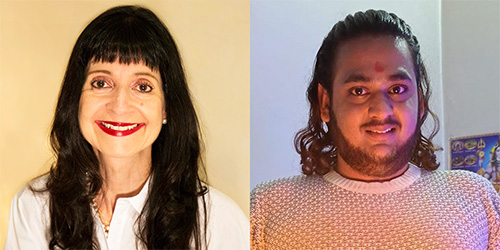
C. M. Rubin and Pranav Kumar Gahadwal
WATCH: Net Zero Speaks with Jong-Seong Kug is now streaming on the Planet Classroom Network YouTube Channel.
The Net Zero Speaks series is curated by Planet Classroom in association with the Protect Our Planet Movement.
Related posts:
 The Global Search for Education: In Peace Boat, Young Activists Fight for Their Planet
 The Global Search for Education: Climate Activist Wen Tian Interviews Hu Jiaojiao
 The Global Search for Education: Malibu Taetz on Animation and Anything Goes
 The Global Search for Education: Climate Activist Drishya Pathak interviews Florian Graichen
