C. M. (Cathy) Rubin in Conversation with Sam Sullivan
This month, audiences can screen David at Davos on the Planet Classroom Network. What happens when an ambitious entrepreneur is faced with the challenge of presenting a world-changing idea on one of the most influential stages on the planet?
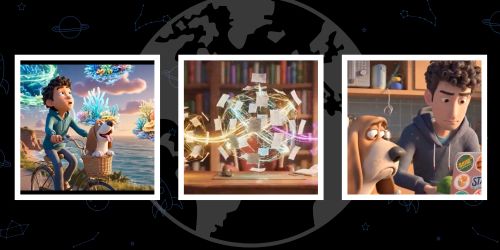
In this animated short, creator Sam Sullivan follows David, a startup founder navigating the pressures of preparing for Davos. Along the way, David discovers that artificial intelligence can do more than process information—it can help transform complexity into clarity, enabling new ways of thinking, creating, and communicating.
The film also serves as a case study in the democratization of storytelling. Using Google’s Veo and other AI-powered tools, Sullivan was able to move rapidly from concept to screen, creating cinematic visuals and compelling narratives without the traditional barriers of large production teams or expensive resources. As AI tools become increasingly accessible, they are opening new creative pathways for a generation of storytellers who may have ideas, but not necessarily technical expertise.
To explore how AI is reshaping the creative process and expanding opportunities for young filmmakers, we sat down with Sam Sullivan to discuss his experience bringing David at Davos to life.
The Global Search for Education is pleased to welcome filmmaker Sam Sullivan.
C. M. Rubin: Your film shows how chaos can turn into clarity with the help of AI. What surprised you most about how quickly you were able to go from idea to finished scenes using Veo?
Sam Sullivan: The most surprising aspect was seeing my rough apartment concepts instantly evolve into polished animated visuals through just a few descriptive prompts. Veo allowed me to iterate on complex ideas, such as the glowing ocean currents featured in the film, in real time rather than waiting weeks for traditional rendering. The speed of experimentation made the creative process much more dynamic and allowed ideas to evolve organically as I worked.
C. M. Rubin: This was your first experience using text-to-video technology. What was the biggest challenge, and what would you say to students who may feel intimidated by these emerging tools?
Sam Sullivan: One of the biggest challenges was getting the dialogue to feel natural, since AI video generation still has limitations in that area. I also had to learn how to balance clip length and scene prompting to keep David’s appearance consistent across different environments. My advice to other students is simple: don’t let the technology intimidate you. Think of AI as a new kind of paintbrush. You don’t need advanced coding skills to create something meaningful—you just need curiosity, creativity, and a willingness to experiment.
C. M. Rubin: In your story, AI helps David think more effectively rather than replacing his ideas. How did using AI influence your own creative process while making this film?
Sam Sullivan: Working with AI allowed me to focus much more on the emotional arc of the story, the visual tone, and the overall flow of the narrative. Gemini became a brainstorming partner that helped organize information and generate ideas, while I remained focused on shaping the heart of David’s journey. Instead of replacing creativity, the technology gave me more space to concentrate on the human elements that make a story resonate.
C. M. Rubin: Many young people believe filmmaking requires extensive technical expertise or expensive equipment. What would you say to someone who thinks, “I’m not technical enough to do this”?
Sam Sullivan: I would tell them that today’s tools are helping bridge the gap between imagination and execution. You don’t need to be a technical expert to become a storyteller. Tools like Veo make it possible for people to bring their ideas to life in ways that were previously out of reach. More than ever, a great idea and a unique perspective are the most important ingredients. Technology is making filmmaking more accessible, which means more voices can participate in shaping the stories of the future.
Thank you, Sam!
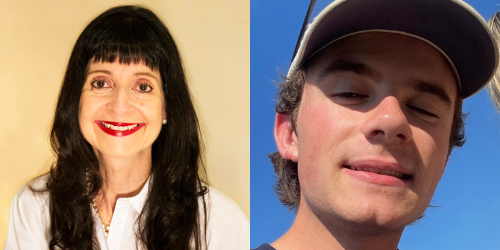
C. M. Rubin and Sam Sullivan
WATCH: David at Davos is now streaming on the Planet Classroom Network YouTube Channel.
Related posts:
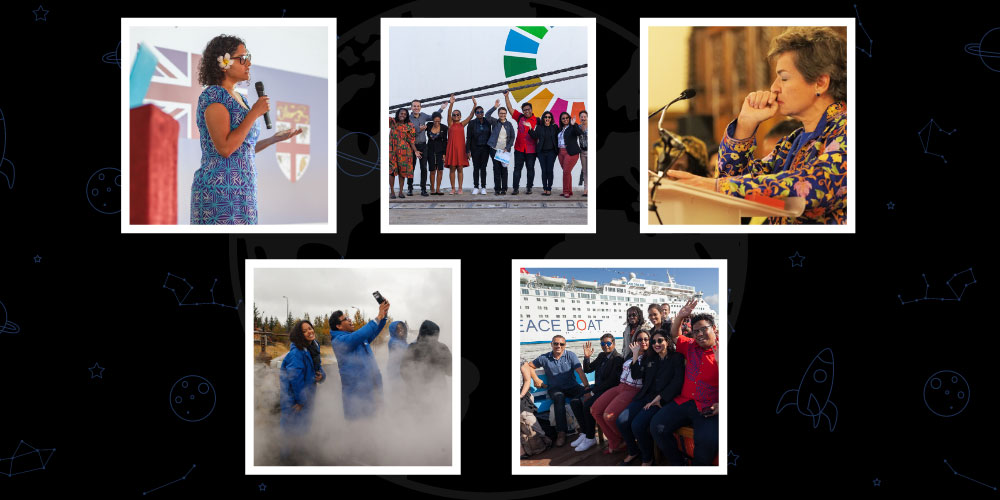 The Global Search for Education: In Peace Boat, Young Activists Fight for Their Planet
 The Global Search for Education: Climate Activist Wen Tian Interviews Hu Jiaojiao
 The Global Search for Education: Malibu Taetz on Animation and Anything Goes
 The Global Search for Education: Climate Activist Drishya Pathak interviews Florian Graichen
