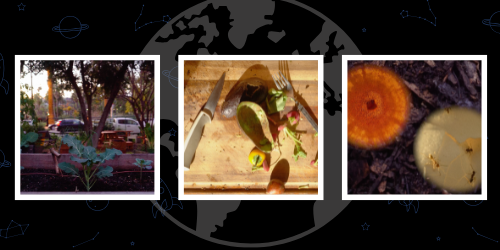
This month, audiences can watch Why Do We Compost? on Planet Classroom’s YouTube Channel. This film is curated by Planet Classroom.
In Why Do We Compost?, director Adam Hersko-RonaTas partners with the California Association of Compost Producers to deliver a visually striking public service announcement about the power of composting. The short film offers an energetic celebration of organic recycling, showing why collecting kitchen scraps and returning them to yards and community gardens can help reconnect us with the natural cycles that sustain healthy soil.
Blending music-video energy with saturated color, dynamic text, and time-lapse imagery, the film transforms an everyday environmental practice into an engaging invitation to rethink what we call “waste.” At its heart is a simple message about environmental stewardship: small, conscious actions can help us reconnect with nature and reconsider our role within its larger cycles.
The Global Search for Education is pleased to welcome Adam Hersko-RonaTas.
C.M. Rubin: What inspired you to make Why Do We Compost?, and what did you want viewers to understand or feel by the end of the film?
Adam Hersko-RonaTas: Reckoning with food scraps, turning a compost pile, witnessing life sprout from decay, is an accessible and embodied reminder of our place in the web of life. Through my years in various community gardens and studying ecology, I’ve befriended many brilliant land stewards who specifically advocate for compost as the way to close the loop on an extractive, seemingly linear economic system that forgets to honor the soil. This film celebrates them and that philosophy.
In cities we’ve become disconnected from our sources of food, and deep-rooted cycles of nature by over/out-engineering our environment. Food, and what happens to our “waste,” remains a largely abstract idea. We’re led to believe humans sit outside of, or perhaps in the middle of a linear process where it’s “food in, trash out.” But this conveniently ignores the greater cycles we have a responsibility to engage with as participants in nature.
I hope viewers leave this clip inspired to put their hands in the ground, and reconsider what conscious balance with nature’s existing rhythms can look like.
C.M. Rubin: The film has the energy and visual language of a music video. Why did you choose this style to tell a story about something as everyday as composting?
Adam Hersko-RonaTas: I was producing this as a spec P.S.A. for the California Alliance for Community Composting. Cutting through the noise means crafting something visually striking that moves quickly. How you say something is equally important as what you say. Important info isn’t enough if no one wants to listen.
I liked the thought of elevating compost, which is written off as this dirty paltry thing, to something worthy of reverence. Music videos draw us in with their flow, and have shaped what we consider “cool” for a long time. It’s fun to direct flashy energy toward something underappreciated and apparently mundane.
C.M. Rubin: You directed, edited, and cinematographed the film. How did you use rhythm, color, and on-screen text to make a simple environmental message visually engaging?
Adam Hersko-RonaTas: The song “Kelly Watch the Stars (Vegyn Version)” by Air always makes me feel hopeful, and has a driving rhythm to it that hooked me since I first heard it. I love the synesthesia of translating that sonic feeling into a nonstop flowing visual ride where viewers lose sight of the seams and drop into a temporary fantasy, as a way to deepen connection with an idea, not as an escape.
The timelapses of scallions and bean sprouts I shot at home also seemed dance-like, which suited a musical pulse. Using saturated colors serves as an invitation to see bright possibilities in something dark, and reminds me why I like to be outside. The on-screen text helps reinforce the messaging, like a dynamic poster, especially when narration is difficult to hear out of a phone speaker.
I wanted to make it a looped video too, as a symbolic nod to the very cyclical nature of the system it advocates for.
C.M. Rubin: What are you working on now, and are there any new stories or ideas you’re especially excited to bring to audiences next?
Adam Hersko-RonaTas: I’ve been writing screenplays and short stories lately, with a common thread of reconsidering our place within nature, and exploring what actually works if we wish to see change. I’m currently producing a feature courtroom drama that follows an ensemble of witnesses grappling with their sense of purpose in the face of modern technology.
I’ve also been excited to explore solarpunk as an aesthetic of hope and agency through the videos I’m making for various environmental groups. I plan to continue facilitating in-person events around Los Angeles and beyond so people can live out their own stories.
I love when an audience becomes involved in the art through community, volunteering, music, gardening, and food.
Thank you, Adam!
Film Credits
Director: Adam Hersko-RonaTas
Editor: Adam Hersko-RonaTas
Cinematographer: Adam Hersko-RonaTas
Produced in partnership with: California Association of Compost Producers
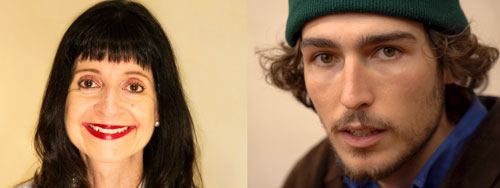
C. M. (Cathy) Rubin with Adam Hersko-RonaTas
🎥 Watch Why Do We Compost? on the Planet Classroom YouTube Channel here.
This film is curated by Planet Classroom.
Related posts:
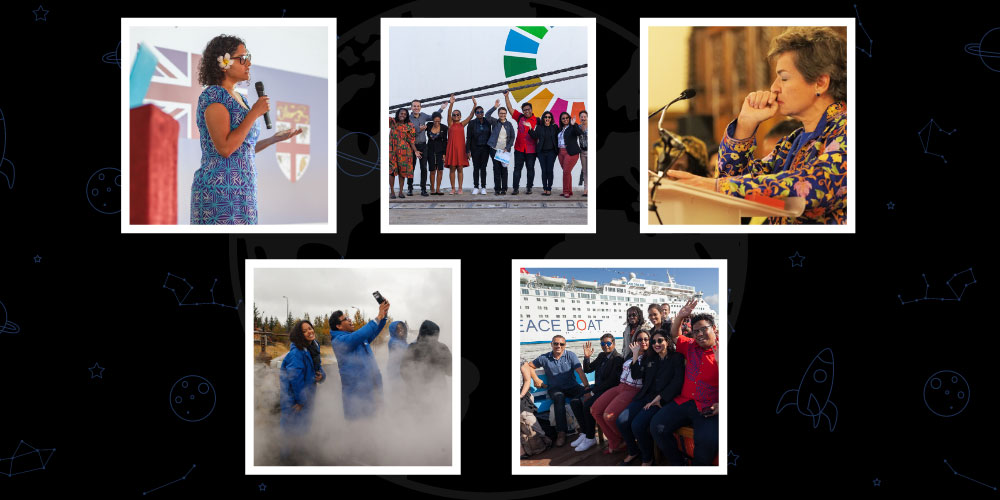 The Global Search for Education: In Peace Boat, Young Activists Fight for Their Planet
 The Global Search for Education: Climate Activist Wen Tian Interviews Hu Jiaojiao
 The Global Search for Education: Malibu Taetz on Animation and Anything Goes
 The Global Search for Education: Climate Activist Drishya Pathak interviews Florian Graichen
