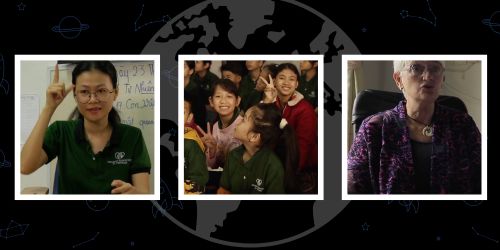
This month, audiences can watch Hearing & Beyond on the Planet Classroom YouTube Channel. This film is curated by Actuality Abroad for Planet Classroom.
In Hearing & Beyond, award-winning director Jaime Torres tells the inspiring story of Lanh, a young deaf woman in Hoi An, Vietnam, whose life is transformed through her connection to the region’s only education center for deaf and hard-of-hearing children. As Lanh discovers friendship, support, and a sense of belonging, Torres captures the power of inclusive education and community to create opportunity and hope.
Produced on location in Vietnam by an Actuality Abroad crew, this moving documentary explores disability inclusion, accessibility, empowerment, and the importance of ensuring every child has the opportunity to thrive.
The Global Search for Education is pleased to welcome Director Jaime Torres.
C.M. Rubin: Jaime, what was it about Lanh’s story that convinced you it could resonate with audiences around the world, and what did you hope viewers would take away from her journey?
Jaime Torres: What drew me to Lanh’s story was her perseverance. She wasn’t born deaf, but lost her hearing during a difficult period in her life when she was also struggling financially. When she first came to Hearing and Beyond, she started working there as a cleaner. Over time, she learned sign language, became part of the community, and eventually became a teacher herself.
Her experience is very specific to being a deaf young woman in Vietnam, but the feeling of being isolated, wanting to be understood, and finally finding a community where you belong is something people anywhere can relate to. That was what made me feel her story could resonate beyond Vietnam.
I was also inspired by the way she turned her own struggles into something positive by helping and inspiring younger deaf children. I hoped viewers would come away inspired by her perseverance, but also with a greater understanding of how important community, education, and opportunity can be in changing someone’s life. Especially during difficult times, I think we need stories about people like Lanh who keep moving forward and use their experiences to help others.
C.M. Rubin: Many of the film’s most powerful moments come through quiet observation. How did you build trust with Lanh and the deaf community to capture such authentic and intimate scenes?
Jaime Torres: A lot of it came down to being patient and respectful. I didn’t want the camera to feel intrusive or make anyone feel like they had to perform for us. We spent time observing Lanh and the community and allowed moments to happen naturally instead of trying to force them.
There was also a language and communication barrier, so it was important for me to listen in other ways and pay attention to body language, expressions, and the relationships happening in front of the camera. As trust developed, people became more comfortable with our presence, and that allowed us to capture some of those quieter and more intimate moments.
For me, the goal was always to represent Lanh and the deaf community with dignity and honesty, and to let their experiences speak for themselves as much as possible.
C.M. Rubin: Every documentary changes its filmmaker. How did making Hearing & Beyond change your own understanding of disability, communication, and the importance of belonging?
Jaime Torres: Making Hearing & Beyond changed the way I thought about communication and belonging. Before making the film, I think I understood disability mostly from the outside. Spending time with Lanh and the deaf community showed me that communication is much bigger than spoken language. It can come through sign language, expressions, body language, and simply making the effort to understand another person.
What stayed with me most was the importance of belonging. Lanh had gone through isolation and difficult circumstances, but finding Hearing and Beyond gave her a community and eventually a sense of purpose. She went from working there as a cleaner to learning sign language and becoming a teacher herself.
It made me realize how much having a place where you feel understood and accepted can change the direction of someone’s life. That is something that goes beyond disability and is something all of us need.
C.M. Rubin: If educators, policymakers, and community leaders around the world watched this film, what is the one lesson you hope they would take away about creating opportunities for deaf and hard-of-hearing children?
Jaime Torres: The biggest lesson I would hope they take away is that opportunity can completely change the direction of a person’s life. Deaf and hard-of-hearing children need more than access to education; they need places where they feel understood, supported, and included.
Lanh’s journey shows what can happen when someone is given that kind of environment. She came to Hearing and Beyond during a difficult period in her life, learned sign language, found a community, and eventually became a teacher helping younger deaf children.
I hope educators, policymakers, and community leaders see the importance of creating spaces where deaf children are not treated as limited by their disability, but are given the tools, support, and opportunities to build confidence and reach their potential.
Thank you, Jaime!
Film Credits
Director: Jaime Torres
Producer: Jacob Hathcock
Cinematographer: Shelby Kalista
Editor: Alexus Anderson
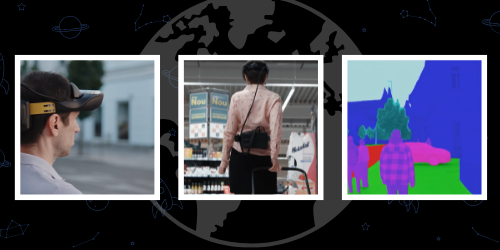
C. M. (Cathy) Rubin with Jaime Torres
🎥 Watch Hearing & Beyond on the Planet Classroom Network YouTube Channel here.
This film is curated by Actuality Abroad for Planet Classroom.
Related posts:
 The Global Search for Education: Climate Activist Wen Tian Interviews Hu Jiaojiao
 The Global Search for Education: Malibu Taetz on Animation and Anything Goes
 The Global Search for Education: Climate Activist Drishya Pathak interviews Florian Graichen
 The Global Search for Education: Nathan Ward on Filming the Circus of Empowerment
