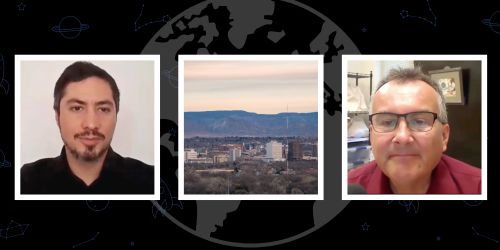
C. M. Rubin in Conversation with Ivan Ransom
This month, global audiences can watch Net Zero Speaks on the Planet Classroom Network, featuring an insightful conversation between climate host Ivan Ransom and leading regional expert Dr. David W. DuBois. The series is curated by Planet Classroom in association with the Protect Our Planet (POP) Movement.
David W. DuBois is the State Climatologist of New Mexico, Director of the New Mexico Climate Center, and Associate Professor at New Mexico State University. His vital work focuses on helping localized communities understand and actively respond to intersecting climate challenges, including extreme drought, escalating heat waves, water scarcity, dust storms, and public health air quality risks.
In this Net Zero Speaks episode, Dr. DuBois explains how global climate changes are fundamentally experienced on a local level, breaking down how minor temperature changes completely disrupt regional infrastructure and agricultural systems. He illuminates how everyday citizen science data collection dramatically improves climate monitoring and outlines why communities around the world must proactively plan for hotter, drier futures.
Engaging and deeply practical, the conversation explores how community-driven environmental monitoring and ancient water-saving wisdom can empower the next generation to step past climate anxiety and become active participants in global climate resilience.
The Global Search for Education is pleased to welcome Ivan Ransom.
C. M. Rubin: Ivan, why did you decide to interview Dr. David W. DuBois?
Ivan Ransom: Being aware of global climate trends is incredibly important, but being aware of highly specific local information can quite literally save lives. Dr. David DuBois sits at the intersection of local climate reality and community action. Knowing the precise, regional impacts of weather events is the only way to develop and implement successful mitigation strategies, whether that means protecting public health directly, minimizing economic damage to infrastructure, or saving crops.
I thought this conversation would be uniquely valuable for young people. It is packed with practical wisdom all the way through, emphasizing a vital core message: we must be proactive, not reactive. The process of climate adaptation requires young people to dare to speak up and act. Dr. DuBois’s work demonstrates how local data gives us the agency to do exactly that, helping youth overcome the fear of failure so they can step forward and build a body of meaningful real-world knowledge.
C. M. Rubin: Ivan, what surprised you most about this interview?
Ivan Ransom: Two major things completely stood out and challenged my assumptions. First, I was deeply surprised and encouraged by the massive scale of their Citizen Science initiative. Seeing the sheer volume of everyday people who are willing to regularly collect local environmental data and submit it to climate platforms is incredibly inspiring. It creates a genuinely participatory, democratic approach to scientific discovery.
Second, Dr. DuBois shared some shocking demographic data regarding heat-related health impacts. One would naturally assume that the oldest and youngest members of our communities are the most vulnerable to extreme heat. However, recent studies show that 20-year-olds are actually experiencing the highest rates of heat impacts. It made the immediate danger of climate change feel much more personal and relevant to my generation.
C. M. Rubin: Finally, Ivan, what are your three key takeaways for the Net Zero audience?
Ivan Ransom:
- Failure is a necessary step toward climate success. The learning curve for global adaptation requires us to try things that may not work perfectly the first time. We cannot let an apparent “failure” discourage us; every time we miss an initial objective, we are building the essential experience needed to get closer to a real solution.
- Global communities can learn a great deal from New Mexico’s water strategies. We can significantly adapt to water scarcity right now by pairing modern technology with ancestral wisdom. For instance, New Mexico has shown it is entirely possible to reduce agricultural water usage by 10% without sacrificing crop yields by honoring agricultural knowledge built over millennia by Indigenous communities.
- Citizen science turns audiences into an active part of the solution. I strongly suggest that everyone look for and join a local Citizen Science initiative. By observing and tracking your immediate surroundings, you will develop a profound understanding of your local ecosystem’s threats and potential solutions. It allows this and coming generations to build the democratic data blocks needed to make better decisions.
Thank you, Ivan!
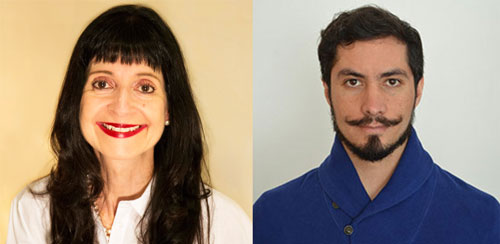
C. M. Rubin and Ivan Ransom
WATCH: Net Zero Speaks with David W. DuBois is now streaming on the Planet Classroom Network YouTube Channel.
The Net Zero Speaks series is curated by Planet Classroom in association with the Protect Our Planet Movement.
Related posts:
 The Global Search for Education: Climate Activist Wen Tian Interviews Hu Jiaojiao
 The Global Search for Education: Malibu Taetz on Animation and Anything Goes
 The Global Search for Education: Climate Activist Drishya Pathak interviews Florian Graichen
 The Global Search for Education: Nathan Ward on Filming the Circus of Empowerment
