
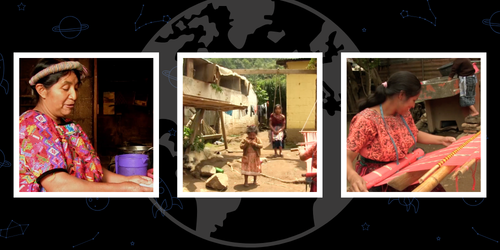
This month on the Planet Classroom Network YouTube channel, audiences can watch Personas de Pixan, a short documentary curated for Planet Classroom by Actuality Abroad.
Directed by Assétou Xango, Personas de Pixan (Spirits of the Soul) is a powerful and intimate portrait of Indigenous women in Guatemala working to preserve their culture in the face of social and economic challenges.
Through striking visuals and deeply personal storytelling, the film explores how these women confront the pressures of machismo and the ongoing erosion of traditional ways of life. At its core is the concept of Pixan—meaning “soul” or “spirit”—a reflection of the resilience, identity, and cultural strength that define their journey.
Rather than presenting these communities through an external lens, Personas de Pixan centers the voices of the women themselves. It reveals how language, heritage, and collective memory are actively protected and passed on, even as external forces threaten to diminish them.
Subtle, urgent, and deeply human, the film reframes cultural preservation not as nostalgia, but as a form of resistance and empowerment. By highlighting grassroots leadership and lived experience, it invites global audiences—especially young viewers—to reconsider how identity, dignity, and community are sustained.
With a tone that favors authenticity over abstraction, Personas de Pixan opens space for meaningful conversations about Indigenous rights, representation, and the enduring impact of colonization.
The Global Search for Education is pleased to welcome director Assétou Xango.
C. M. Rubin: What drew you to the stories of the women in Pixan, and why did you feel this was an important film to make now?
Assétou Xango:
I am invested in the stories of Indigenous peoples being shared more widely and respectfully. Colonization and imperialism are focused on stamping out these voices, or reframing them in ways that justify their dehumanization. I am committed to combating that in any way I can.
C. M. Rubin: How did you approach telling this story in a way that respectfully represents Indigenous identity, culture, and lived experience?
Assétou Xango:
I worked with them closely. Much of the work of the film happens when the cameras aren’t rolling—when my crew and the women of Pixan are crowded in a small bedroom, getting to know one another.
We also worked closely with the founders of AMA, who have been working in the community for generations. They understand the stories of the families and their histories far better than we ever could. We built rapport with the organization and the families, and let them tell the story they wanted to tell.
C. M. Rubin: The film highlights the work of the Asociación de Mujeres de las Alturas (AMA). What did you learn from these women about resilience, community, and redefining traditional roles?
Assétou Xango:
I have the greatest love for the founders of AMA—particularly Claudia Ramirez, with whom I did not share the same language, but we understood each other deeply.
The Ramirez sisters had the fortitude and cleverness to outwit their circumstances and create a foundation that uplifts others like them. They saw, unequivocally, the power of indigeneity and refused to believe what they were taught about their inferiority to foreign forces or to men. I want to be just like them.
C. M. Rubin: What do you hope global audiences—especially young viewers—take away about cultural preservation and the power of grassroots change?
Assétou Xango:
I think it is important to remember that we are all connected—that borders are drawn on a map but have little influence on the natural world. COVID showed us this, as did Ebola in the early 2010s.
When we convince ourselves that others are beneath us or separate from us, we leave ourselves vulnerable to the same harms we are indifferent to them experiencing. It was an honor to be present with these women in their fight for justice in their community, but it is not very different from my own.
Our clothing and language differ, but the way colonization strips people of their humanity is universal. I hope viewers of this documentary understand that—and listen to a story they might otherwise have dismissed.
Thank you, Assétou!
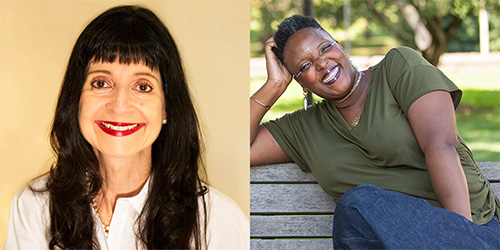
C. M. Rubin with Assétou Xango
🎥 Watch Personas de Pixan on Planet Classroom Network.
This film is curated by Actuality Abroad for Planet Classroom.
Related posts:
 The Global Search for Education: Climate Activist Drishya Pathak interviews Florian Graichen
 The Global Search for Education: Nathan Ward on Filming the Circus of Empowerment
 The Global Search for Education: Director Eshaan Mani Discusses Threads of Tradition
 The Global Search for Education: Crafting Connections at 30,000 Feet: Director Mark Kiefer Discusses By The Book
